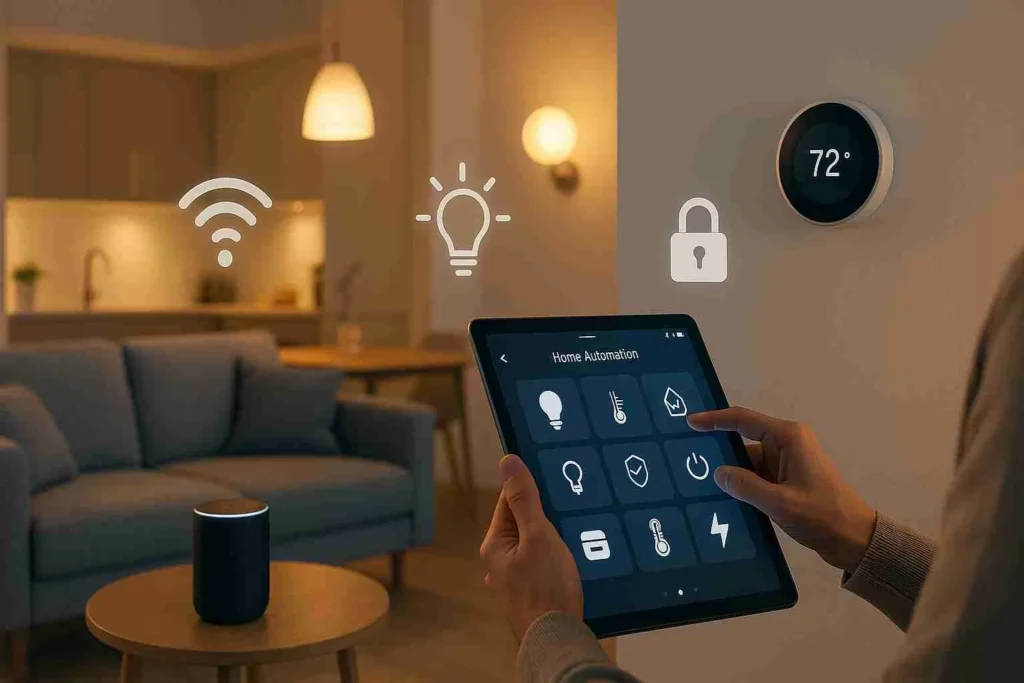
What Does DIY Smart Home Mean?
A DIY smart home lets you choose and install connected devices yourself. Moreover, you can start with simple products. These may include smart bulbs, plugs, cameras, speakers, or thermostats. Also, many devices work through mobile apps. Some also connect to voice assistants. Therefore, this approach gives you control over what you buy. It lets you create your system slowly. However, different brands may use different systems and platforms. They may not always work well together. You may need different apps. Network issues can also affect the working.
Alternatively, as your system grows, setup can become more difficult. Planning then becomes important. This is why a DIY system can fit smaller needs. It works well when you want only a few smart features. For larger tasks, expert planning may be more useful.
How does professional home automation work?
Professional automation takes an effective approach. An installer first looks at your property. They also plan and discuss your goals. Moreover, they can assess lighting, blinds, climate, security, entertainment, and networking needs. The system is then created around these needs. This can help different devices work together. Moreover, expert smart home automation installation can also decrease compatibility problems. Wiring and network needs can be considered early. The installer can check scenes and controls around your routines.
Additionally, you may also have one central way to manage different functions. This can make a larger system easier to use. Also, professional installation can demand a higher initial budget. However, it can offer a structured setup. It may also make future upgrades simpler. This option can help homeowners who want a complete system instead of separate devices.
Which option fits your home?
The better option depends on your project. Moreover, a small apartment may only need a few smart devices. You could install lights, plugs, or a doorbell yourself. However, a larger home may have more trendy needs. It may include many rooms and connected systems. Therefore, in that case, planning becomes more important. Homeowners thinking of a smart home setup Kensington should also know about their future needs. You may want automated blinds or lighting later. Additionally, you may also want to connect security or entertainment systems.
Therefore, buying devices one at a time can create compatibility issues. A planned system can help stop them. Think about your technical skills too. DIY can be effective if you enjoy technology. Professional installation may be more useful if you want convenience and ongoing support.
What should you consider before choosing?
Before choosing an approach, list the working elements you want to automate. Therefore, start with your daily routines. Then decide which areas need automation most. Moreover, budget is another important factor. DIY lets you control spending by adding devices slowly. Professional systems can include installation and configuration costs. You should also consider reliability and compatibility. This is because not every device works with every system. Therefore, your internet connection may affect connected devices.
Think about how you want to control the system. You may want an app, voice commands, wall controls, or a combination. Homeowners looking for smart home specialists Surrey should also ask about support. Alternatively, find out how the system can be improved later. A good plan should leave room for future changes. It should also help stop unnecessary equipment. These points can make the final decision easier for you.
Conclusion: DIY or professional- Which is better?
There is no one answer for every homeowner. DIY can be a good choice for simple projects. Moreover, it offers you flexibility. It also lets you learn as you go. However, professional automation can make more sense for larger homes. Furthermore, it can connect several functions in one system. An expert system can also help with planning and configuration. The right home automation solution should fit your property, budget, and goals. Consider what you need now. Then think about what you may want later. Therefore, this can help you avoid remaking the system.
Alternatively, if you want a structured installation, professional support may be effective. If your needs are small, DIY may be enough. Livora can be considered when exploring a broader connected home approach. Therefore, compare your options before making a decision. The best system should work reliably. It should also fit your daily routine. Careful planning can also improve usability. It can keep controls reliable across rooms and connected devices. It should be easy for everyone in the home to use. Clear controls can make daily work more convenient. Good planning can also decrease changes during future upgrades. This can save time and effort later too.
FAQs: Everything you need to know
- Is DIY smart home installation cheaper?
DIY can decrease installation costs, but device and setup costs still depend on your chosen products.
- Is professional home automation better for large homes?
Professional installation can be useful for larger systems with multiple connected functions.
- Can DIY smart devices work together?
Yes, but compatibility should be checked before buying devices from different brands.