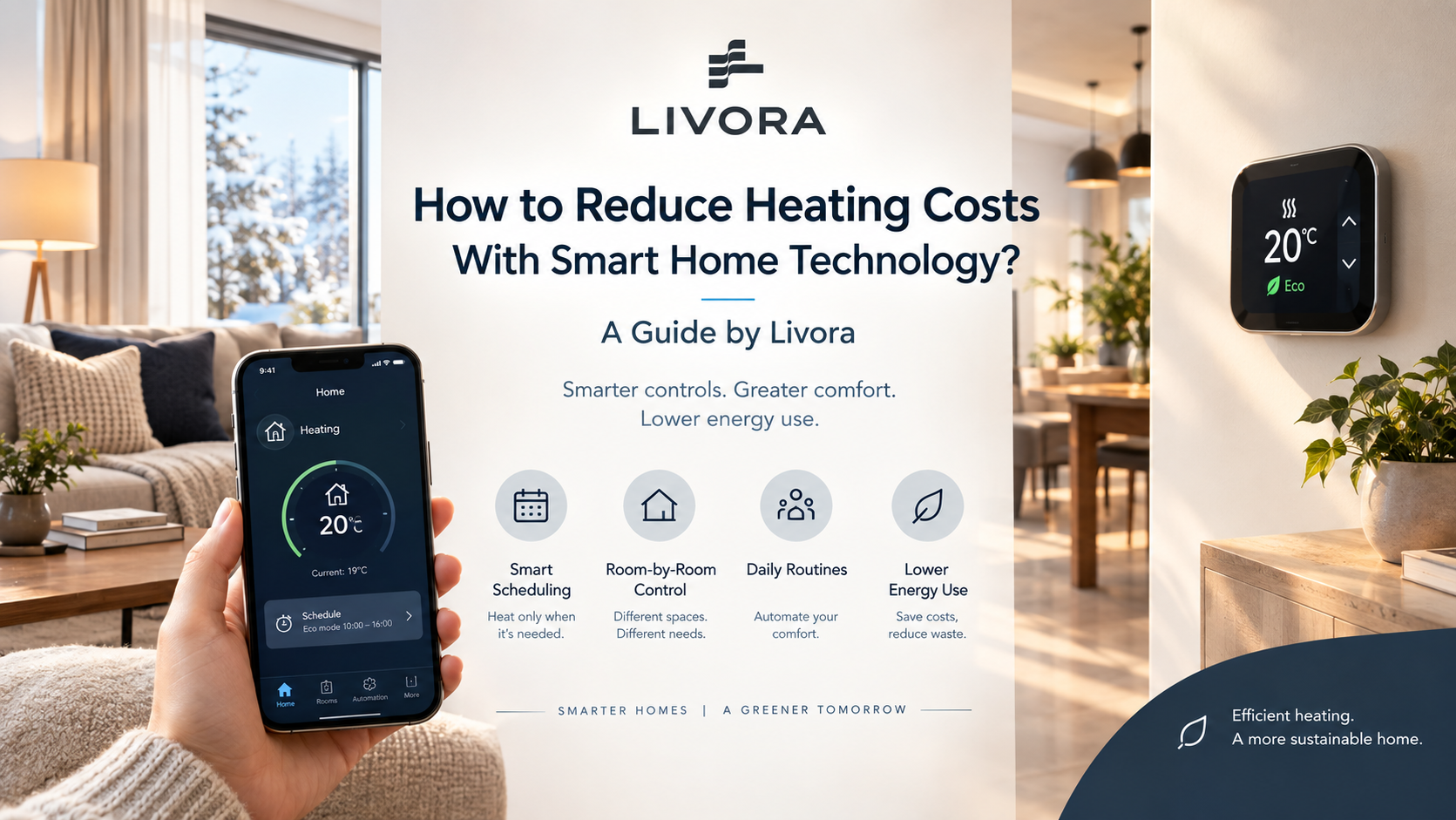
Heating can add up for a great part of household energy use. Moreover, running a heating system when rooms are empty can waste energy. All the while keeping every room at the same temperature can also increase use. However, smart technology can help you manage heating around your daily routine. You can set timers, fix temperatures, and control connected systems from a single interface. The goal is not to keep your home cold. It is to use heating when and where it is important.
Additionally, a smart setup can also make changes easier. Therefore, before adding technology, think of your current heating uses. You can also review your energy patterns over time. This may show when heating is used most. These small details can help you decide which settings need changes. Clear settings can also make daily control simpler for everyone in the household throughout the year. Also, identify rooms that need regular heating and then consider times when heating may not be needed.
Use heating schedules
A heating schedule can help decrease unwanted energy use. Moreover, instead of running heating continuously, you can set it around your timeline. For example, you may want the temperature lower while everyone is away. All the while you can then raise it before people return home. Furthermore, night time settings can also decrease heating when a higher temperature is not needed. Bedrooms may need less heating during the day. However, living areas may need more attention during the evening. Smart controls can help manage these differences.
Alternatively, you can create routines based on your normal schedule. This can decrease the need for manual changes. Smart home automation can also bring heating controls together with other connected functions. The exact features depend on the system and compatible tools. Additionally, good scheduling should showcase how your household actually uses each space.
Manage different rooms more efficiently
Heating every room in the same way may not always be needed. Moreover, some spaces may be used for only a few hours each day. Others may need constant heating. Therefore, room based controls can help you manage these differences. You can set varying temperatures or schedules where the system helps them. Sensors may also offer information about room conditions. This can help connected systems work according to programmed settings. Smart controls can be greatly useful in homes with different living areas.
Therefore, if you are researching smart home automation Kensington, consider how your home’s layout affects heating needs. Windows, insulation, room size, and current heating setups can all increase or decrease the energy use.
Combine controls with your daily routine
Smart heating works best when the controls fit your lifestyle. A system should make useful changes without creating extra work. Moreover, you might form a morning routine that adjusts the temperature before you wake up. All the while an evening routine could lower the setting when the household relaxes. You may also be able to control settings from a distance, depending on the system. Additionally, you could adjust the heating before returning home instead of leaving it working all day.
Alternatively, if you are considering smart home automation Surrey, think about how heating connects with other systems. Blinds, lighting, and sensors may form part of a bigger system. A home automation expert can help evaluate the property and understand suitable options. The aim is to create effortless control.
Conclusion: Make heating more efficient
Smart technology can give you better control over how and when your heating works. Moreover, it can help fix temperature settings with your household routine. It can also support room by room control where compatible technology allows it. However, technology alone does not bring lower energy costs. Your property’s insulation, heating system, weather, energy prices, and daily habits also change the overall use. Therefore, start by reviewing when your heating runs. Then understand areas where automated schedules or controls could decrease unnecessary operation.
A well planned setup can make these changes easier to manage. Livora offers connected home solutions that can bring heating and other systems into a proper setup. Additionally, with the right planning, you can cut down on the heating costs with smart home technology while maintaining a comfortable home. The goal is effective energy management. It is not simply adding more devices. Alternatively, small changes in heating schedules and room controls can make everyday management more seamless.
FAQs: Questions worth asking
- What smart features can help decrease the heating use?
Schedules, room controls, sensors, and remote adjustments can help manage heating more efficiently.
- Can smart heating work with an existing system?
It may be possible, depending on your heating setup, controls, wiring, and the smart technology selected.
- Will smart technology offer lower heating bills?
No, savings depend on your heating system, property, energy prices, settings, and household usage.